


Get Involved
Be Part of AdvocaSEA
Removing plastic from beaches and waterways — and pushing for the policies that stop it at the source — to protect seabirds and coastal wildlife.
Why this is urgent
Coastal habitat is on a clock. The window to protect seabirds and the beaches they nest on is closing fast.
- 11 million metric tons of plastic enter the ocean every year — and global plastic pollution is on track to more than double by 2040 (Pew & Systemiq, Breaking the Plastic Wave 2025).
- ~1 million seabirds die from plastic annually. By 2050, 99% of seabird species are projected to have ingested plastic (Wilcox et al., PNAS).
- In recent necropsy studies, 35% of seabirds and ~50% of sea turtles were found with plastic in their gut — and the lethal dose is far smaller than scientists previously believed (2025 study, reported by NPR & Mongabay).
- Laysan albatross chicks in the Northwestern Hawaiian Islands are now found with plastic in over 97% of cases — and the volume per chick keeps rising.
Every year of delay locks in more pollution, more dead chicks, and more degraded coastline. State and local policy is the fastest lever we have.

The Problem
Plastic kills seabirds two ways
• Ingestion. Adults mistake bottle caps, fragments, and lighter shards for prey, then feed them to chicks.
• Entanglement. Bags, foam rings, fishing line, and balloon ribbons trap birds, turtles, and marine mammals.
Laysan albatross chicks in the Northwestern Hawaiian Islands routinely die with stomachs full of plastic. Northern fulmars are now the global indicator species — measuring plastic in their gut is how scientists track ocean pollution.
Cleanups treat the symptom. Policy treats the cause. AdvocaSEA does both.

What we do
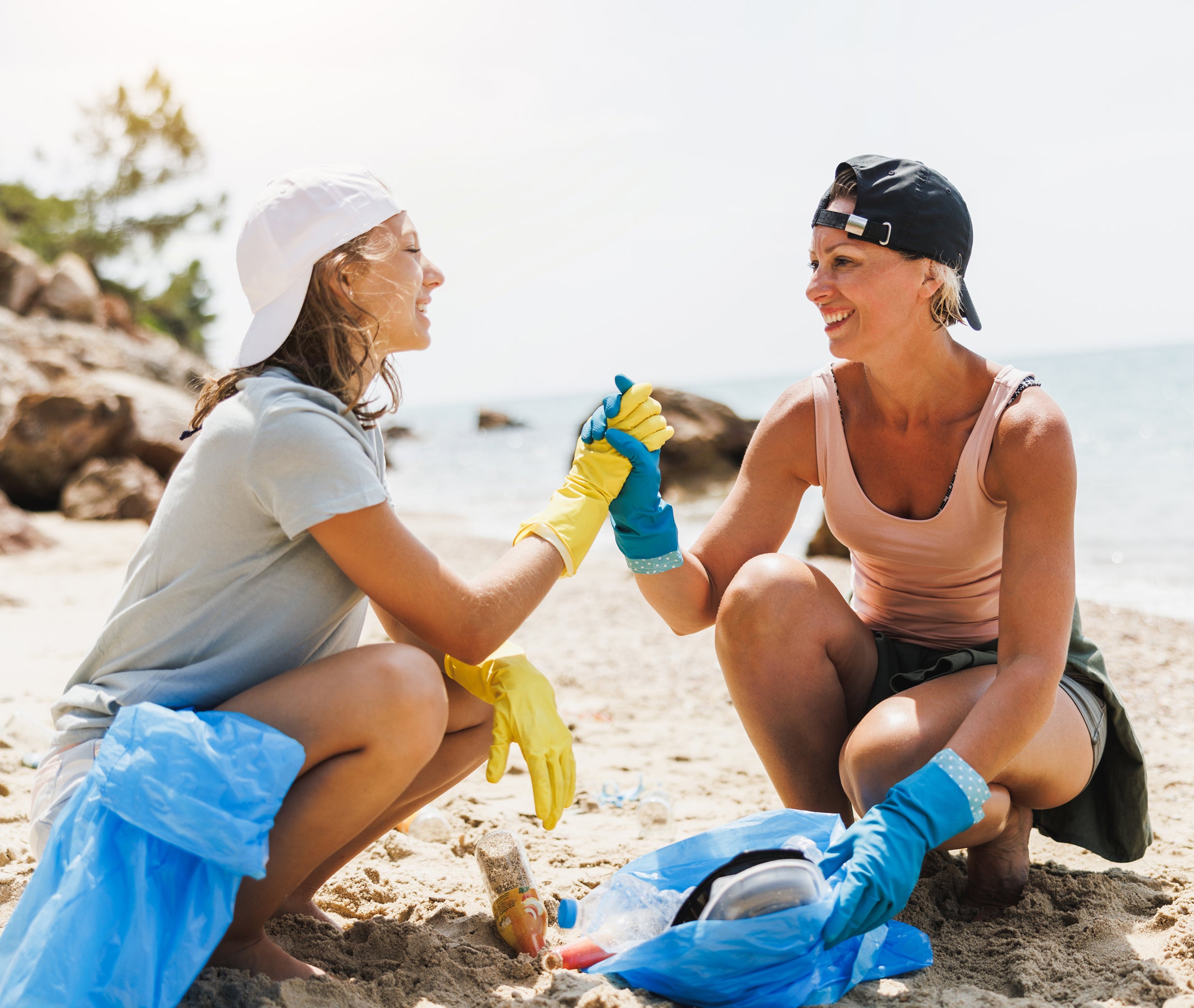
Remove plastic from beaches and waterways, hands-on.
Document every bottle cap, balloon scrap, and bag fragment as data.
Advocate at the state and local level for upstream laws that stop the next piece of plastic from ever reaching the water.
The five policy levers that protect seabirds
- Bag ban or fee — bags are the single largest item in beach cleanups.
- Foam (EPS) ban — foam fragments instantly and is mistaken for fish eggs by surface-feeding birds.
- Packaging Extended Producer Responsibility (EPR) — makes producers pay for the cleanup and redesign of their own packaging.
- Bottle bill / container deposit — cuts beverage-container litter 70–80% in states that have one.
- Balloon-release ban — ribbons and latex kill albatross, terns, and turtles. Cheap, clear, easy to win.
Where the country stands — May 2026
Leaders (3+ levers in force): California, Oregon, Maine, New Jersey, Maryland.
Strong starts: Washington, New York, Delaware, Connecticut, Rhode Island, Virginia, Hawaiʻi, Puerto Rico, U.S. Virgin Islands.
Major gaps: the entire Gulf Coast, most of the Southeast Atlantic, and most of the Great Lakes — often because state law blocks cities from acting.

Three asks any local advocate can use
- If your state preempts local action
Texas, Florida, Georgia, North Carolina, Michigan, Ohio, Indiana, Minnesota, Wisconsin
Ask: repeal or narrow preemption. Let cities and counties act on bags and containers. - If your state has no statewide laws yet
Alabama, Mississippi, Louisiana, New Hampshire, Alaska
Ask: a first foam ban or bag bill. Pick the most popular lever and start there. - If your state already has bag and foam laws
e.g., New York, New Jersey, Delaware
Ask: packaging EPR — modeled on Maine (2021), Oregon (2021), California (2022), Minnesota (2024), Maryland (2025), or Washington (2025).
Everywhere: add a balloon-release ban. Florida, Connecticut, and Delaware already have one. It is the simplest seabird win in the country.

Why seabirds are the right messenger
- They are visible and beloved — pelicans, puffins, albatross, plovers, terns.
- Their plastic exposure is measurable and documented.
- They cross jurisdictions — a puffin off Maine eats plastic dumped in New Jersey.
- Protecting them protects the same beaches and bays people use.
A bird with a stomach full of plastic moves a legislator who never moved on a chart.
How to plug in
- Join a cleanup. Every bottle cap and balloon ribbon is a data point.
- Email your state legislator. Use our fact sheet to know exactly what to ask for.
- Name your local birds. “Brown pelican” and “common loon” beat “marine wildlife” every time.